


Spectacular Hair Color Options for Fabulous Older Women (Photos)
Should I let my hair go gray? We all face that tough decision sooner or later. We can let nature take control all along, or when gray first appears, we can punt and color our hair “for the time being.”
By age 60, it’s no longer the time being. I find that women our age talk a lot about whether it’s time to stop coloring and find out what we really look like.
We might find out that our hair is a soft and beautiful white. Or it could be a shiny silver. Maybe it’s not even completely gray yet. But it’s likely to just be either dull or white.
Thinking of going grey? This article explains what to really expect.
A Brighter Gray
Since I write for the hair industry, I asked for guidance from a couple of hairdressers who love their clientele in this age range.
Frank Shortino, a Wella artist and owner of Shortino Salon and Spa in York, Pennsylvania, says his “gray reduction” is a popular color service for women who want to cover up the years without exactly covering the gray. This is much less time-consuming and costly than keeping up with full gray coverage.
“I just put a little gold into the hair,” Frank tells me. He says the warm tones light up not only the hair but also the face. “It’s like putting a pinch of salt into your food,” he explains. “This is just a pinch of color in the hair.”

Recapture Your Rich Color
Despite any vision of plucking out gray one strand at a time, going gray typically begins as a gradual loss of vibrance. If you’re a brunette, for example, one day you might look in the mirror and realize that the brown is more taupe.
Youth’s vivid color fades, which you notice if you have long hair because you can contrast the top with the ends that grew out of your head perhaps years earlier. With short hair, you may not pick up on this evolution.
Often, highlights are the first solution for women who just want their hair to look the same as it used to look. Highlights add brightness and disguise what’s going on up there.
Read What is the Best Shampoo and Conditioner for Grey Hair, According to Women Over 60?
But highlights do not restore brilliance. As the fading deepens, the next step tends to be single-process color. You choose a shade that’s as close as you can get to the color your hair was before it began losing its luster. Photos from your earlier adulthood can help with this.
Once you get used to a maintenance schedule for single-process color, your stylist may circle back to highlights – not instead of the color but on top of it to give your hair dimension and get closer to natural-looking hair color, which is never exactly the same color.
Read 60 Shades of Grey: Why Women are Going Grey Gracefully.
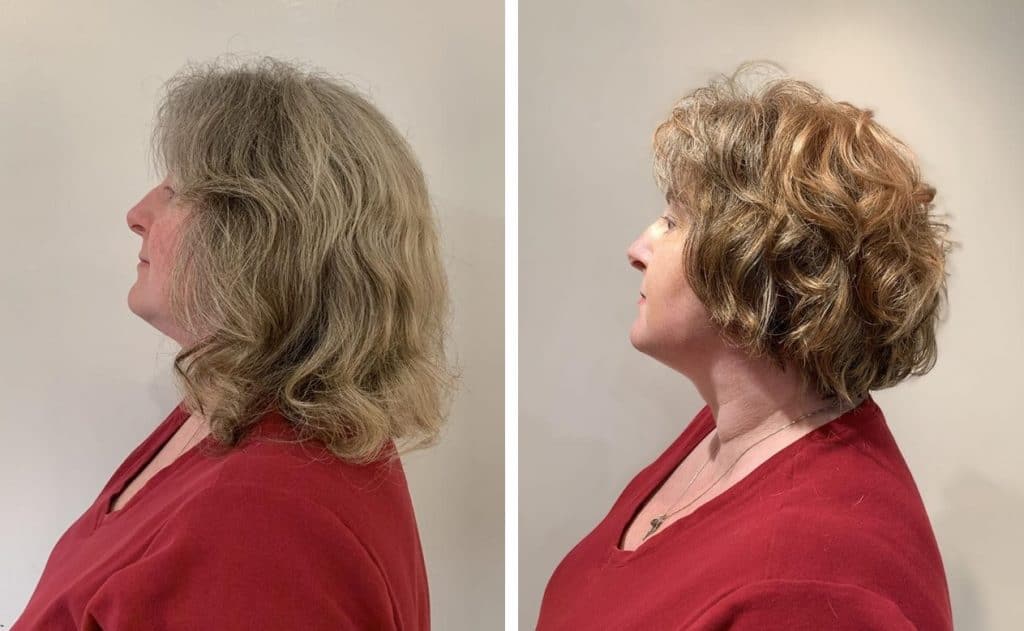
In the photos of Frank Shortino’s client shown below, the difference from “before” to “after” is the vibrance. The shade is similar but bolder and more youthful, aided by golden highlights. The cut further helps by bringing out the wave, which builds additional dimension and movement.
Similar to Frank’s client is the chestnut look below designed by Maria Mello, owner of Hair Ninja Salon in Brandenton, Florida. Caramel strokes like these are a popular addition to many shades, acting as lowlights for blondes and highlights for brunettes and reds.

For Maria’s client with longer blonde hair, a soft rose color defines the accents. Highlights in rose, violet or blue are opening up more choices for women of all ages.

Ready for Fashion Color Extravaganza?
Some of Maria’s clients really want to stand out, so she fills that request by going full-speed with fashion color. Maria says she’s become known in her area for these dramatic cherry, purple, magenta, and rainbow looks.


“I always joke that it’s a great transformation and cheaper than a sports car or plastic surgery,” Maria says. “I admire these women so much. One told me that she’s done everything to please other people her whole life, and now it was time to do something that makes her happy.”
Read 2025 Hair Color Trends for Women Over 50.
Hair makeovers have Maria smiling, too.
“I love my job and especially this clientele, because I get to see a woman’s face light up when we’re finished,” Maria says. “She finally sees what I saw when she walked in the door – that she’s beautiful.”
Want some hairstyle inspirations? Read our article that covers over 60 hairstyles for older women.
Practical Tips for Maintaining Color
Choosing the right hair color is just the first step. Maintaining it is crucial for keeping your hair looking fresh and vibrant. Here are some essential tips to help you care for your colored hair and extend the life of your beautiful new hue:
Use Color-Safe Shampoos and Conditioners
Color-safe shampoos and conditioners are specifically formulated to protect dyed hair from fading and damage. These products are sulfate-free, which means they won’t strip the color from your hair. Look for products that offer UV protection, as sun exposure can also cause color to fade.

Redken Color Extend Magnetics Shampoo For Color-Treated Hair
Avoid Excessive Heat Styling
Heat styling tools like blow dryers, curling irons, and straighteners can cause color to fade and damage hair. If you must use heat styling tools, always apply a heat protectant spray or serum beforehand. Try to embrace air drying whenever possible, and opt for styles that don’t require daily heat application. When you do use heat, choose the lowest setting that still achieves your desired look.

CHI 44 Iron Guard Thermal Protection Spray
Regularly Visit Your Stylist for Touch-Ups
Consistent salon visits are essential for maintaining vibrant color. Your stylist can touch up your roots, refresh faded areas, and trim any damaged ends. Depending on your chosen color and hair growth rate, schedule touch-up appointments every 4-8 weeks. Regular trims also help keep your hair looking healthy and prevent split ends, which can make your color appear dull.
Deep Condition Weekly
Colored hair needs extra moisture to stay healthy and shiny. Incorporate a deep conditioning treatment into your weekly routine to nourish and repair your hair. Look for masks or treatments with ingredients like keratin, argan oil, or shea butter. Leave the treatment on for the recommended time to allow your hair to absorb all the benefits.

Arvazallia Hydrating Argan Oil Hair Mask and Deep Conditioner for Dry or Damaged Hair
Minimize Washing
Frequent washing can strip your hair of its natural oils and fade color faster. Try to wash your hair no more than 2-3 times a week. On non-wash days, use a dry shampoo to absorb excess oil and keep your hair looking fresh. When you do wash your hair, use lukewarm or cool water instead of hot, as hot water can open the hair cuticle and cause color to wash out more quickly.
Read 7 Best Dry Shampoos for Women Over 50.
Protect Your Hair from the Sun
UV rays can be harsh on colored hair, causing it to fade and become dry. When spending time outdoors, protect your hair by wearing a hat or using hair products with built-in UV protection. Consider using a leave-in conditioner with SPF to shield your hair from sun damage.
Read Hats Are Fascinating Items of Clothing for Women Over 60 (Video)
More Hair Color Ideas
Here are more spectacular hair color options:

This multi-color fun style follows the natural flow of her layers and curls, with cool hues seamlessly melting into one another for a soft yet striking effect. The silver base maintains brightness and vibrancy, while the pastel accents add a playful, modern contrast.

Why not go lilac? Have fun with trendy colors! Add a gloss treatment to enhance the silky finish, ensuring the lilac shade remains luminous and reflective.

This hair color is a chic, soft, pastel pink hue, expertly toned for a balanced mix of warmth and coolness. The color is seamlessly blended, with subtle variations in blush and rose tones adding depth and dimension.

This hair color features a rich, natural base that seamlessly transitions into dark, subtle purple ends. The color melt is expertly blended, creating a smooth gradient where deep plum and muted violet tones softly emerge at the tips. The effect is understated yet sophisticated, adding dimension without overpowering the overall look.
Let’s Have a Conversation:
What color did your hair turn with age? What are you doing about it? Is there a hair color you’d like to experiment with? Please share with our community!
Photo credits: Images courtesy of Shortino Salon and Spa and Hair Ninja Salon.


At 77, I’m only starting to notice more grey coming in. My naturally blond hair got darker with age, so I have blond woven in; I call it “restoring it to its natural color, ha)! I do not have the grey concealed, however, and when I have enough, I just may go natural. As far as grey making one look old, just think of Emmylou Harris! She’s gorgeous in grey!
I don’t want to start an uncomfortable conversation, but not everyone who reads your blog is Caucasian and not all have Caucasian-like hair. By showing only Caucasian women, how are women of other ethnicities and hair types to get an idea of what will work in their hair? And mind you, not every hair product works well in every hair type. Please be considerate of your ENTIRE audience in future posts. Thank you
Thank you for commenting, Karen. Please note that this article is based on hairdressers’ expertise and the photos used by the author are provided by same hairdressers, as noted in the credits. The advice is not mentioned to be related to any ethnicity, so assuming it is would be incorrect. Vibrant hair colors can and are used by fabulous women of all ethnic groups, and we should celebrate that!
Cheers!
Karen, thank you for your comment. It’s important. This article is based on one stylist’s clientele, but I will tell you that in the salon community there is now a lot of advocacy for broadening education in textured hair. Many states have not yet made texture hair proficiency a requirement for cosmetology licensure, and that is being challenged. I’ll see what I can do about putting together an article that addresses color for women 60 and older who have coarse, curly and other types of textured hair.